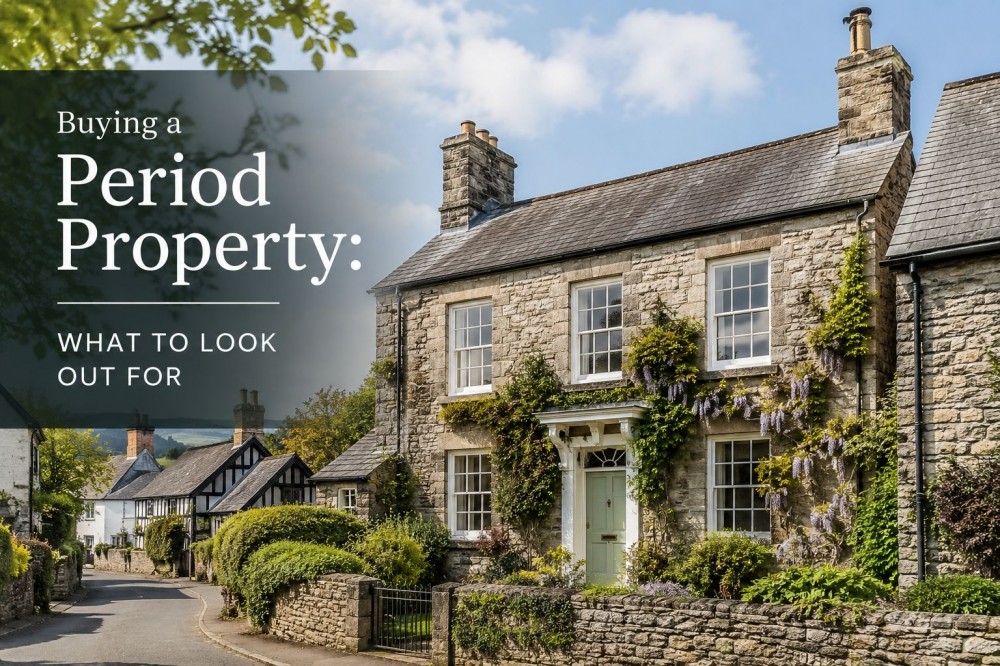
Buying a Period Property: What to Look Out For
From charming cottages with exposed beams to impressive Victorian townhouses and Georgian country homes, period properties have a character that's difficult to replicate. Original fireplaces, sash windows, flagstone floors and centuries of history all add to their appeal, making them some of the most sought-after homes across Mid Wales, Monmouthshire and the Wye Valley.
However, older homes come with their own quirks and responsibilities. Whilst that's often part of their charm, it's important to understand what you're buying before making one of the biggest investments of your life.
Here are some of the key things to look out for when viewing a period property.
1. Embrace Character – But Look Beyond It
It's easy to be won over by exposed beams, original stonework and beautiful fireplaces. Whilst these features are often what make a period home so special, remember to look beyond the aesthetics.
Ask yourself:
- Is the layout practical for modern family life?
- Is there enough storage?
- How much natural light does the property receive?
- Will the home suit your needs for years to come?
A property can be full of charm, but it still needs to work for your lifestyle.
2. Check for Signs of Damp
Many older properties were built using traditional materials designed to "breathe", allowing moisture to move naturally through the walls. Modern materials such as cement render or non-breathable paints can sometimes trap moisture, leading to damp issues.
Whilst some minor damp isn't unusual in older homes, keep an eye out for:
- Musty smells
- Peeling wallpaper or paint
- Tide marks on walls
- Crumbling plaster
- Black mould around windows or corners
Not all damp is serious, but it's worth investigating further before committing to a purchase.
3. Inspect the Roof
The roof is one of the most expensive parts of any property to repair or replace.
From ground level, look for:
- Missing or slipped slates or tiles
- Uneven roof lines
- Damaged chimneys
- Sagging gutters
- Vegetation growing where it shouldn't
If you're unsure, a surveyor will be able to inspect the roof more thoroughly.
4. Original Windows
Traditional timber sash or casement windows are a beautiful feature, particularly in listed buildings and conservation areas.
Check whether they:
- Open and close properly
- Show signs of rot
- Need repainting
- Have been sympathetically repaired
- Are single or double glazed
Bear in mind that replacing windows in listed buildings often requires consent, and like-for-like replacements can be costly.
5. Heating and Insulation
Older homes weren't built with modern energy efficiency standards in mind.
Consider:
- The age of the boiler
- Type of heating system
- Loft insulation
- Draughts around doors and windows
- Energy Performance Certificate (EPC) rating
Many period homes can be made more energy efficient, but improvements sometimes need careful consideration to preserve the building's character.
6. Look for Movement
Older buildings naturally move over time, and not every crack is a cause for concern.
However, larger cracks, uneven floors or doors that no longer close properly could indicate more significant movement.
A qualified surveyor can advise whether any movement is historic or ongoing.
7. Check for Listed Building or Conservation Area Restrictions
Many period homes are listed or located within conservation areas.
This helps preserve their historic character but can also affect what alterations you can make.
Before buying, check:
- Whether the property is listed
- If previous alterations have the necessary approvals
- Whether future extensions or changes may require consent
It's always better to understand any restrictions before you move in.
8. Services May Be Older
Whilst the property itself may be centuries old, you'll want to know about the modern essentials.
Ask about:
- Electrical wiring
- Plumbing
- Boiler age and servicing
- Drainage arrangements
- Water supply
- Broadband speeds
Many older rural homes also rely on private drainage systems or private water supplies, so it's worth understanding how these operate.
9. Don't Forget the Survey
Every property purchase should be supported by a survey, but they're especially valuable for older homes.
A survey can highlight issues that aren't obvious during a viewing, giving you a clearer picture of the property's condition and helping you budget for future maintenance.
It doesn't necessarily mean you shouldn't buy the property—it simply allows you to make an informed decision.
10. Remember That Character Comes With Responsibility
Owning a period property is incredibly rewarding, but it does require ongoing care.
These homes have often stood for well over a hundred years because they've been looked after by generations of owners. Regular maintenance is usually far more cost-effective than allowing small issues to become major repairs.
If you're prepared to care for a period home, you'll be rewarded with a property that's full of personality, history and timeless appeal.
Final Thoughts
Period properties offer something that modern homes often can't—individuality, craftsmanship and a real sense of history. Whilst they may require a little more maintenance and understanding, many owners wouldn't swap them for anything.
The key is to go into your purchase with your eyes open. Ask questions, commission a good survey and take advice where needed. That way, you can enjoy all the charm of an older home with confidence.
If you're looking for a character property in Mid Wales, Monmouthshire or the Wye Valley, our experienced team would be delighted to help. We know the local market inside out and regularly market everything from cosy stone cottages to magnificent country houses, helping buyers find a home they'll love for years to come.